
Controlling day-to-day food intake and physical activity can feel like a daunting task. It can be hard to determine exactly which foods, drinks or specific actions will lead you to better blood sugar control, and which will lead to glucose spikes and subsequent insulin surges that result in higher average glucose levels. This is where a continuous glucose monitor, or CGM comes in.
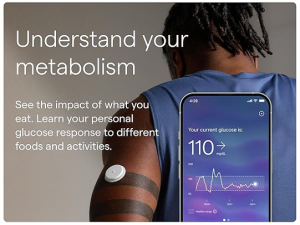
CGM devices are wearable sensors that connect to your smartphone. They transmit real-time blood sugar values to an app on your phone. You can use this information to make better choices, time eating and exercise habits and ultimately follow patterns that will help you to reduce your average blood sugar values. This technology has developed by leaps and bounds in the last few years, and we are now seeing some reliable and easy to use, over-the-counter products available to patients at acceptable prices.
Blood glucose is often highest one hour after eating then will come back down, once insulin is released by the pancreas. Ideally it will not go above 140. A level of 200 is much too high. Using a CGM device makes it easy to monitor these changes after each meal and every snack. You will also begin to see how sleep, stress, exercise and sedentary activities all affect your own personal glucose levels.
 Many people have misconceptions about what will spike their sugar. For instance, we saw one patient who always thought oatmeal was a good breakfast, only to find she had sky-high blood glucose just after eating even just a small bowl without syrup or sugar added. This was so much the case, that the oatmeal raised her sugar more than eating a small bowl of ice cream which contains higher levels of fat to offset the sugar response. Another example is a patient who ordered a grilled chicken kale salad, specifically with half the usual dressing. There was a huge sugar spike on his CGM – the reason was lots of sugar in the dressing and in the candied nuts, and not a whole lot of chicken or fatty ingredients to offset these sugars. Another patient thought he was doing himself a favor by ordering espresso with oat milk and not “adding” sugar. The result was a steep spike on his CGM, showing oat milk had quite a negative impact on his blood sugar. Obviously, highly refined packaged foods, breads, pastries, chips, pizza and French fries can have some of the most alarming effects.
You will get a daily average glucose number when wearing a CGM sensor. Ideally, we want this number to be below 114. As blood sugar is better controlled your weight will also decline. You will be better educated on the effect of food choices, and eventually you will become your own expert.
We are offering an over-the-counter option for CGM in our supplement store called Lingo by Abbott. This device is specifically for people who are not diagnosed with diabetes but would like to monitor and improve sugar levels. Our staff can help you apply the sensor to your arm and connect to your smartphone (iOS required).
One sensor will continuously register glucose levels through the app on your cell phone for 2 weeks. Then replace it if desired. For patients who have been diagnosed with diabetes, we recommend a similar CGM, Libre 3 Plus by Abbott, which provides wider glucose measurement and may be reimbursed by insurance.
There are many nutritional supplements that can help with blood sugar control and cardiovascular health. Here are a few we have found to be effective for patients looking to lower their A1C levels and flatten their blood sugar graphs over time:
- Berberine is an herbal product that increases insulin sensitivity and lowers blood sugar. Usual recommended dose is a 500mg twice daily with food. Berberine can also be found with Lipoic Acid as a combination product.
- Diaxinol by Orthomolecular is a combination product containing herbs, alpha lipoic acid and chromium, ingredients with blood sugar lowering benefits. Usual recommended dose is 2 capsules daily.
- Akkermansia is a specific type of probiotic that supports healthy weight management, naturally enhances metabolism, and helps regulate blood sugar levels.
- Glycemacore by Orthomoleuclar is a protein powder formulated to supports healthy blood sugar levels, strengthens cardiovascular health and provides key nutrients for blood sugar regulation.
- Additional supplements that help with cardiovascular health overall include CoQ10, high quality fish oil products containing EPA-DHA and/or SPMs, time release niacin, vascular enzymes and others.

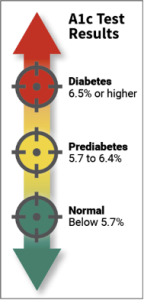
To see long-term effects of a lifestyle program incorporating a CGM device, ask your doctor to check or recheck your A1C level. A1C is a simple whole-blood test that gives a 3-month average estimate of blood sugar levels in your blood. The lower you can go below 5.7, the better. An A1C of 5.7-6.4 indicates pre-diabetes.
It is a good idea to have blood lipids measured as well. With better glucose control, you will see triglycerides come down and good cholesterol (HDL) go up too.
Overall, CGM is a fantastic tool to help promote overall health, energy, longevity and well-being. For more information or to make an appointment with an IPM doctor, please contact our office.
– Allan Sosin MD
